Who gets to be English? Restore has its answer. Reform and the Tories mumble.
And they are all asking the wrong question. In any case, the British public have already spoken on this issue.
- Braverman, Reform, 22 September
- “Englishness is an ethnicity”
- Restore, 2 September
- “A mass review of citizenships granted”
For a fortnight, a question that used to live on the far fringes of British politics has been argued over out loud at Westminster: can you be English if you aren't white? A former prime minister has answered it. So has a former home secretary who is now Reform's spokesman for equalities, a former chancellor who has joined her party, and the leader of the Conservatives, who has offered a bit of both. Rupert Lowe's Restore Britain has been answering it for months, and has never once hesitated. Back in February its spokesman put the difference between his party and Nigel Farage's into two sentences. More than half a million people have read them.
 Charlie Downes
@cfdownes_
Charlie Downes
@cfdownes_
Reform UK believe that anyone from anywhere can become British. Restore Britain believe that Britain is a people defined by indigenous British ancestry and Christian faith.
4154363,582552,911
Eight months on, everybody's at it. Rishi Sunak called the ancestry test “a test no non-white person can ever pass” (20 September). Jacob Rees-Mogg wrote that “the English are a mongrel people, not an Aryan master race” (The Spectator). Reform's spokesman for equalities said Englishness is an ethnicity. A former chancellor, now in Reform, said it isn't. And on 6 October the Conservative leader said she couldn't understand why “some people are policing other people's identity”.
Most of the shouting has been about one question: can you be English if you aren't white? It's really three questions wearing one coat, and they don't have the same answer. The public has actually made its view on the various parts of this topic quite clear. I'm quite happy to do the same.
1. Does an English ethnicity exist?
Yes, certainly, in the way an Irish or a Punjabi one does: shared ancestry, history and habits handed down. Take the example everyone reaches for: Bukayo Saka, the Arsenal and England winger, born in Ealing to Nigerian parents. He became the go-to case after the Euro 2020 final, when he, Marcus Rashford and Jadon Sancho missed penalties and were racially abused online within hours. He's been the name people reach for in this argument ever since. So: Saka is British. He's culturally English. He's nationally English: he plays for England, and nobody's asking him to stop. He isn't ethnically English, because his parents are Nigerian. That's fine by me. It's a fact about his family tree, not a verdict on him, and he loses nothing by it.
The public is even calmer about it. Asked last autumn, 81 per cent of adults in England said someone can be English regardless of their ethnicity; 13 per cent said you have to be white (YouGov). More to the point, hardly anyone thinks about it. When people were asked to pick the parts of their identity that mattered most, 6 per cent of white respondents put their ethnic group in their top three. Family came top, at 64 per cent (UK in a Changing Europe and Focaldata).
Which is worth holding on to. Ordinary people don't lie awake wondering who is ethnically English. So when someone insists on settling it, it's fair to ask what they want the answer for. Usually it's for the third question.
2. Is it fair to worry about the pace of change?
Yes, and plenty of people do. A majority have wanted immigration reduced for more than a decade: 55 per cent this year, down from 67 per cent in 2015 (British Future). The feeling has hardened, too: half now say the country's culture is changing too fast, up from about a third in 2020 (King's College London and Ipsos).
But look at what the worry is about. Around three-quarters of people want the number of migrant doctors and nurses kept the same or increased (British Future). It's about numbers and pace, not about the people. You can argue that a country has changed faster than it can comfortably absorb, and I'm not sure I'd sign up to everything that follows from it. But it's an argument people are entitled to make, and the public makes it without invasion talk, warnings about “fighting age men”, no-go zones or sharia scare stories. Notice too that it doesn't need an ethnic definition of English at all. It works just as well with Saka on the team.
3. Should ancestry decide who belongs, and how you're treated?
No. And this is the one that matters, because it isn't really about labels. It's about two classes of citizen. Once ancestry decides things, it decides whose interests the state puts first, whose passport can be reviewed, whose family can be sent away though they're here legally, and whose country of origin goes on a list. That isn't a fact about your family tree any more. It's a ranking of people by birth, and it's racist on its own terms.
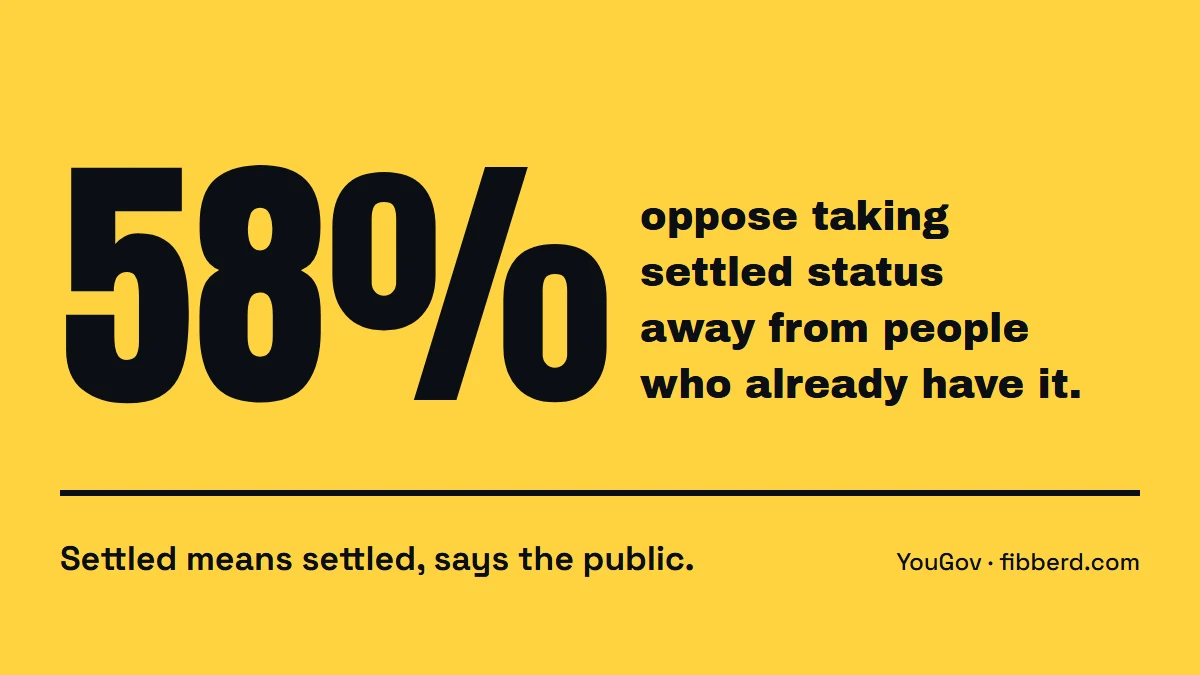
The public seems to know where this line is. Support for tough measures falls away as soon as they reach people who are settled here: 58 per cent oppose taking indefinite leave to remain away from people who already have it (YouGov), and support for stripping citizenship drops from 57 per cent for dual nationals to 24 per cent where it would leave someone stateless (YouGov). Nobody, as far as I can find, has ever polled whether British citizens should be treated differently by ancestry. Presumably nobody thought they'd need to.
Where Restore is
Restore goes straight to the third question, in writing, and it says which ancestry it means. Here is its policy lead, introducing the party's paper on national belonging.
 Harrison Pitt
@Harry_pitt
Harrison Pitt
@Harry_pitt
The White British are projected to become a minority in our own country, our own home. We will not allow it to happen and our stated immigration aims will not allow that to happen. There are now many people who hold a British passport who are not part of our nation in any real sense; they just have a piece of paperwork that says that they are. A mass review of citizenships granted will therefore be undertaken by a Restore Britain government.
813571,96033,256
Read the “therefore”. The reason for reviewing people's citizenship is that the White British might become a minority. That is a race deciding who keeps a passport.
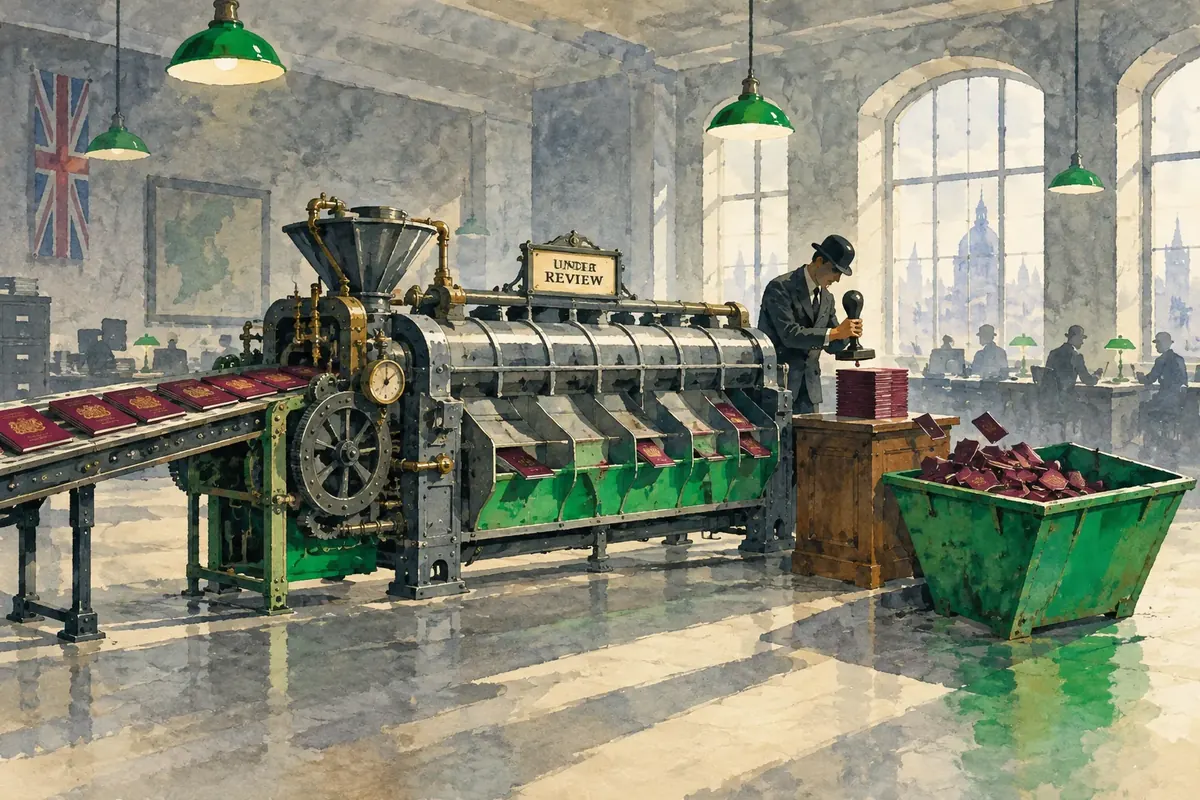
And listen to how they talk about everyone else. The Restore supporter Connor Tomlinson sees “a qualitative difference between European migrants and third world migrants”, because “European migration poses less of a demographic and cultural threat” (26 May). He promises that “India, Pakistan, and the rest of the third world will be on a legal migration red list” (6 May), and that citizenship has no “magic alchemical powers to turn people from the third world into Britons” (10 September). Rupert Lowe, the leader: “625 migrants invaded our country yesterday. A Restore Britain Government will hunt down and deport every single one… Man, woman or child” (7 September, 234,813 views).
Toms has also said that none of this makes anyone “a white supremacist” (18 February). Fair enough: I haven't found anyone in Restore writing down that white people are better. They don't need to. People who think we're all the same don't sort migrants by continent, don't put the third world on a red list, don't call children invaders and don't review passports to keep one race the majority. The ranking is in the rule and in the words, and the words are theirs.
Reform: a position it won't say
Reform's spokesman for education, skills and equalities, in her own words, is Suella Braverman, who left the Conservatives for Reform in January. On 22 September she answered Rees-Mogg.
 Suella Braverman
@SuellaBraverman
Suella Braverman
@SuellaBraverman
As I’ve said before, I’m not English.
I’m proud to be British. My family and ancestors have a link to Britain which spans centuries.
But in no way are we English. Yes, I was born in England, speak English and support the England football team. And indeed, I love England and the English people.
Show moreShow less
But to say I’m English is to take a ‘laissez-faire, anything-goes’ attitude to ethnicity, citizenship and identity. It also denies me my Asian heritage. The liberals (many of them in today’s Conservative Party) take this cosmopolitan approach to Englishness. They’re terrified of being called racist so they say that anyone, as long as they’re born here, can be English.
I take the conservative approach. Englishness is an ethnicity. There have been English people for centuries and we need to recognise this more if we are to start taking a more muscular approach to citizenship and nationality. And no, it’s not racist to say this.
Other countries have no qualms in limiting who can be part of their citizenry and use ethnicity and culture as criteria. Here, the dogma of multiculturalism has been so corrosive that some people don’t actually know who we are anymore.
1,5181,3699,1592,047,069
Notice where that goes. It starts on the first question, where she's entitled to her own view of herself, and ends on the third: “a more muscular approach to citizenship”, with “ethnicity and culture as criteria”. Citizenship is the British part, the bit she says anyone can have. On Question Time on 1 October she described Englishness as “a lineage, an ancestry, a connection to the heritage of this country which dates back a few generations” (as transcribed by HuffPost). Asked more than once whether that meant white, she didn't say.
Her colleague Nadhim Zahawi, on Sky News three days later: “I don't think you have to be white to be English” (as reported by HuffPost). In February, Reform's London mayoral candidate, Laila Cunningham, called Restore's view of who is British “a kind of like neo-Nazi aryan race” on GB News, as reported at the time.
And the leader? Nigel Farage said in February that he was “not going to start drawing ethnic lines on what being English is… it's about how you feel” (as quoted at the time). I can find nothing from him on Braverman's version. But he doesn't avoid the territory, only the definition. He was “the first person to sound the alarm about the invasion of fighting age males into our country” (17 March), he found “more evidence of two-tier policing against white people in Britain” (3 July, 889,461 views), and on Monday, “Our nation is being invaded” (5 October).
Reform does have a position. It's just split down the middle, and it isn't saying so. In YouGov's figures, 54 per cent of Reform voters think you need English family heritage to be English. IPPR found that 71 per cent of Reform supporters think it is important to have British ancestry to be truly British, and 59 per cent see British identity as ethnic rather than civic (IPPR and YouGov). Say it out loud and you lose the other half. Say the opposite and Restore takes the first. So the leader says “how you feel”, the spokesman says “ethnicity”, and the posts say “invasion”.
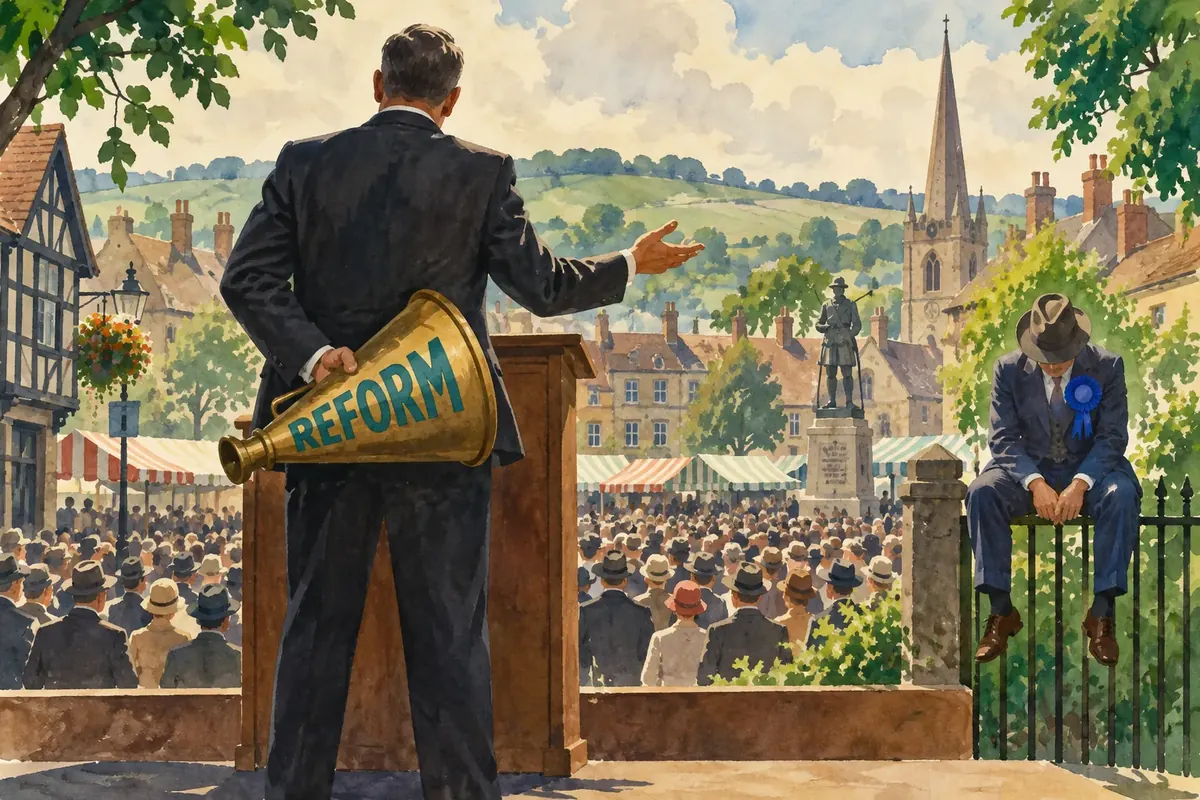
The Conservatives: the same mumble
Kemi Badenoch told BBC Radio 4 in June that Englishness has two sides, one civic and one “down to ancestry, ethnicity, your parents being from here perhaps for hundreds, if not thousands of years”. She counts herself English on the civic side, but said of the other: “it's not in my blood. But it is in my children's blood” (BBC, via AOL). On 6 October, asked about Braverman, she said: “I don't understand why all of a sudden some people are policing other people's identity?” (as reported). Braverman, of course, was her colleague until January.
That's a perfectly defensible view, held in two halves and produced one half at a time. It's also the Conservative position in miniature: Sunak says the ancestry test is one no non-white person can pass, Rees-Mogg says the English are mongrels, and the leader says it's a spectrum and would rather nobody policed it.
The ledger
Restore says the English are a people defined by ancestry, and that passports held by the wrong people should be reviewed. Reform's spokesman for equalities says Englishness is an ethnicity, and should help decide citizenship. Reform's leader won't draw ethnic lines. Just invasion ones. Reform's mayoral candidate called Restore's version neo-Nazi. Half of Reform's voters think you need English family heritage to be English. The Conservative leader thinks Englishness is partly in the blood, and that nobody should police it.
Notice who's asking
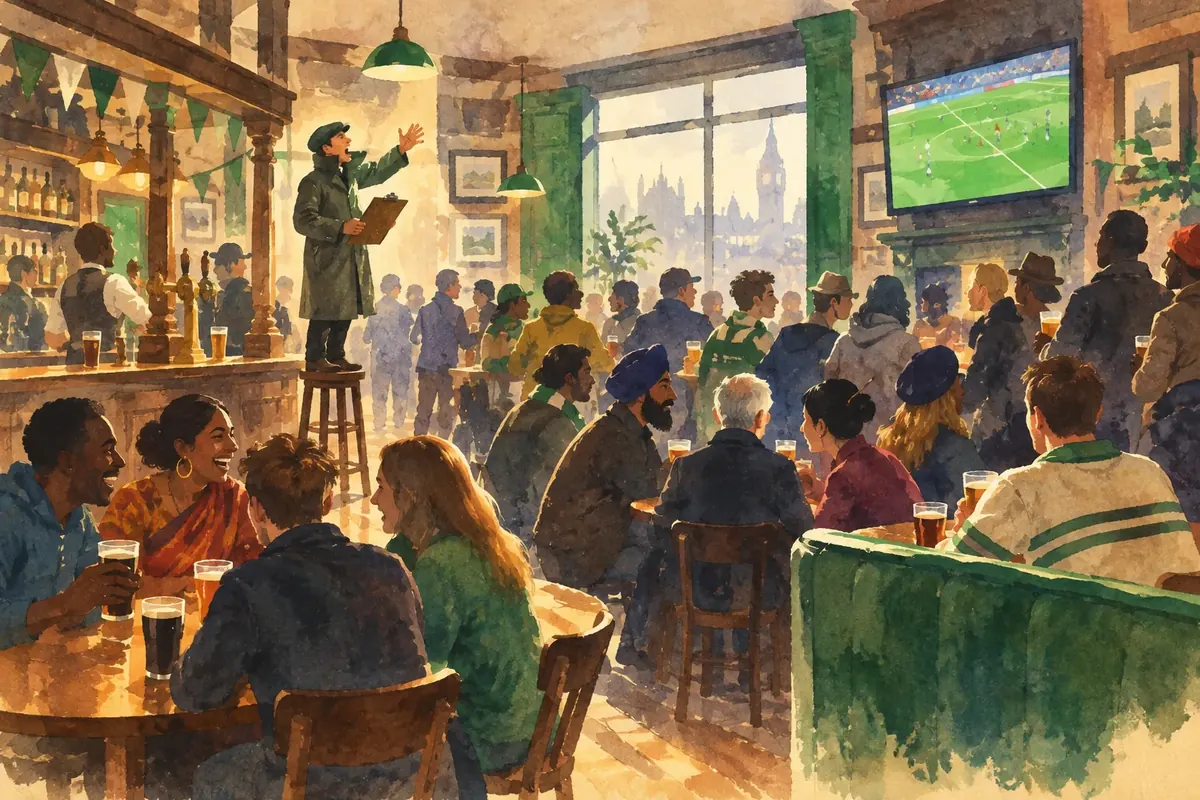
Go back to the public. Eight in ten say anyone can be English. Six in a hundred white people rank their ethnicity among the things that matter most about them. A majority want fewer migrants and to keep the nurses. The British public is not the one demanding a ruling on who is ethnically English.
The people who are asking hardest want the answer for something. A red list. A review of passports. A demographic target with a “therefore” after it. That's why it matters who's asking: the question is only as innocent as the use it's being put to.
Reform and the Conservatives could say that plainly. Instead they keep picking the question up and putting it down again. Mumble long enough, and the only clear answer left on the table is Restore's.
So, which is it?